Design, Analysis, And Experimental Testing of Variable Mean-camber Line Airfoils
Project Overview
One Liner: The aerodynamic performance of current fixed-wing aircraft is limited due to flow separation during hinged-flap use.
Within the last 10-20 years, rapid expansion of unmanned aerial vehicle (“UAV”) applications across the aviation sector has created a growing demand for improved aerodynamic performance of UAVs. Trends in the aviation industry show an increased desire for extending UAV range and maneuverability. Most notably, traditional hinge-flapped mechanisms create points of stagnation that introduce flow separation, which results in aerodynamic losses. This issue has driven significant research in technologies capable of enhancing efficiency and performance of UAVs.
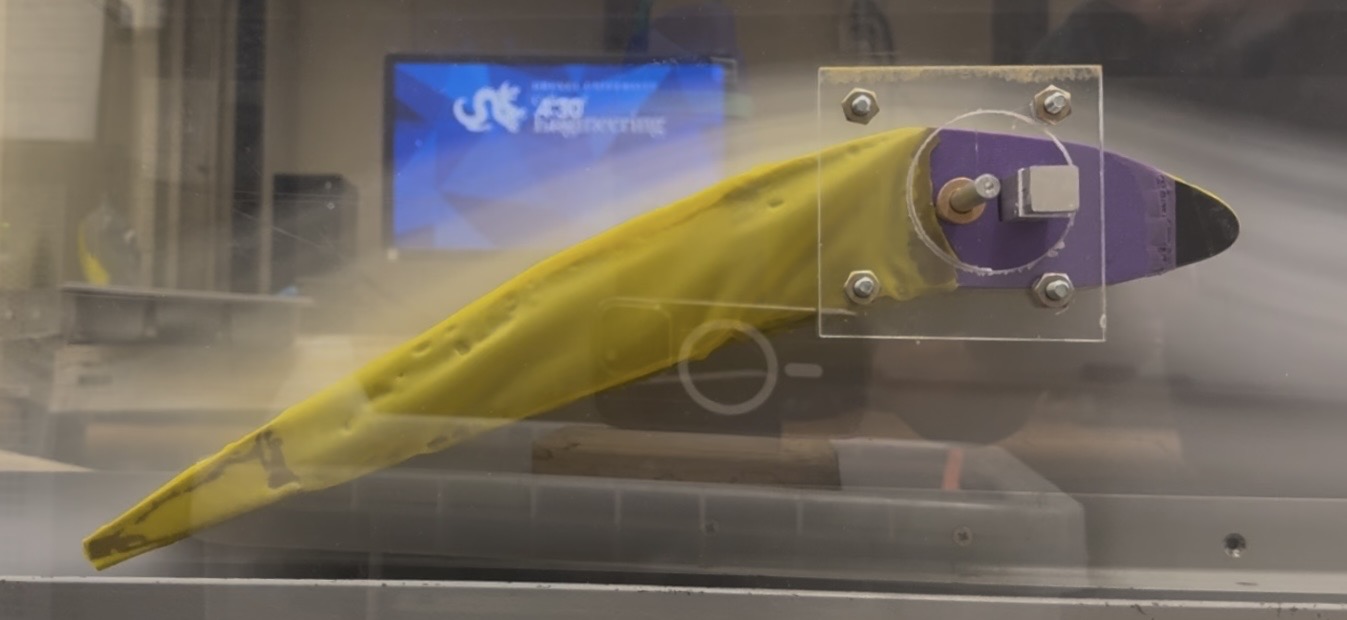
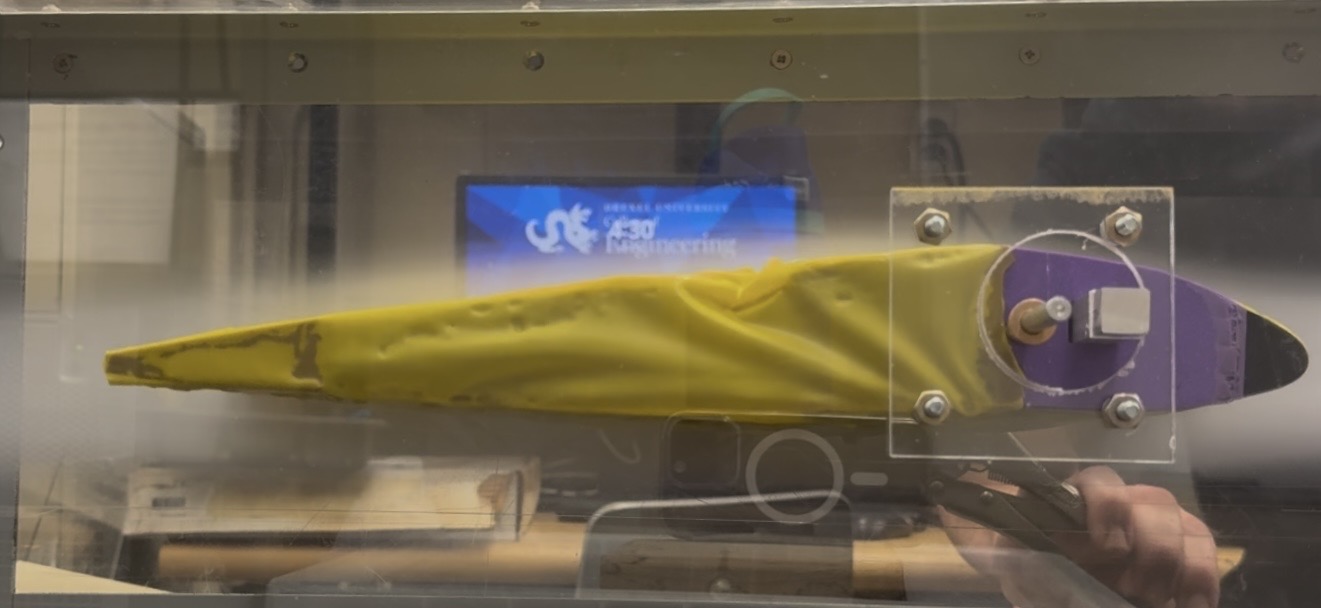
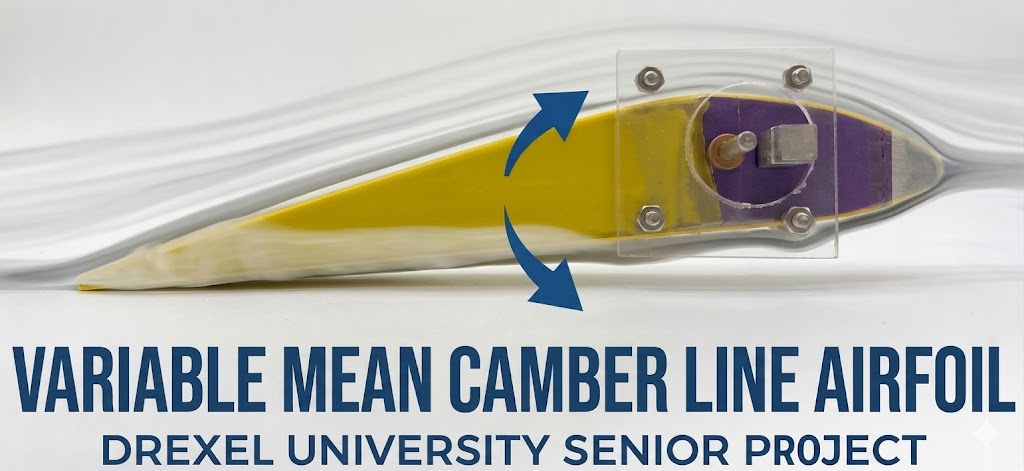
This project aims to address this gap by designing and prototyping a functional Variable Mean Camber Line (“VMCL”) airfoil section capable of an actively changing camber. With the VMCL, the goal is to improve the performance of UAVs by extending the range and maneuverability. The Team will design static airfoils representing both hinged-flap and morphed configurations at equivalent deflection angles using SolidWorks. Both configurations will be analyzed for coefficients of lift and drag through computational fluid dynamics simulations, which will be compared to display increases in aerodynamic efficiency. Additionally, a functional VMCL prototype featuring a flexible rib structure and torque-rod actuation mechanism is developed to demonstrate real-time camber adjustment. Wind tunnel testing of this prototype will explore the deformation behavior, flow visualization using a smoke generator, the achievable camber range, and resulting flow patterns to ultimately provide further validation of the morphing concept. Achieving quantitative improvements through CFD and prototyping will validate the feasibility of morphing technology for private, commercial, and defense applications.
No video available.
Screenshots
2 image(s)