NeuroTrack: A Platform for Fly Brain Function
Project Overview
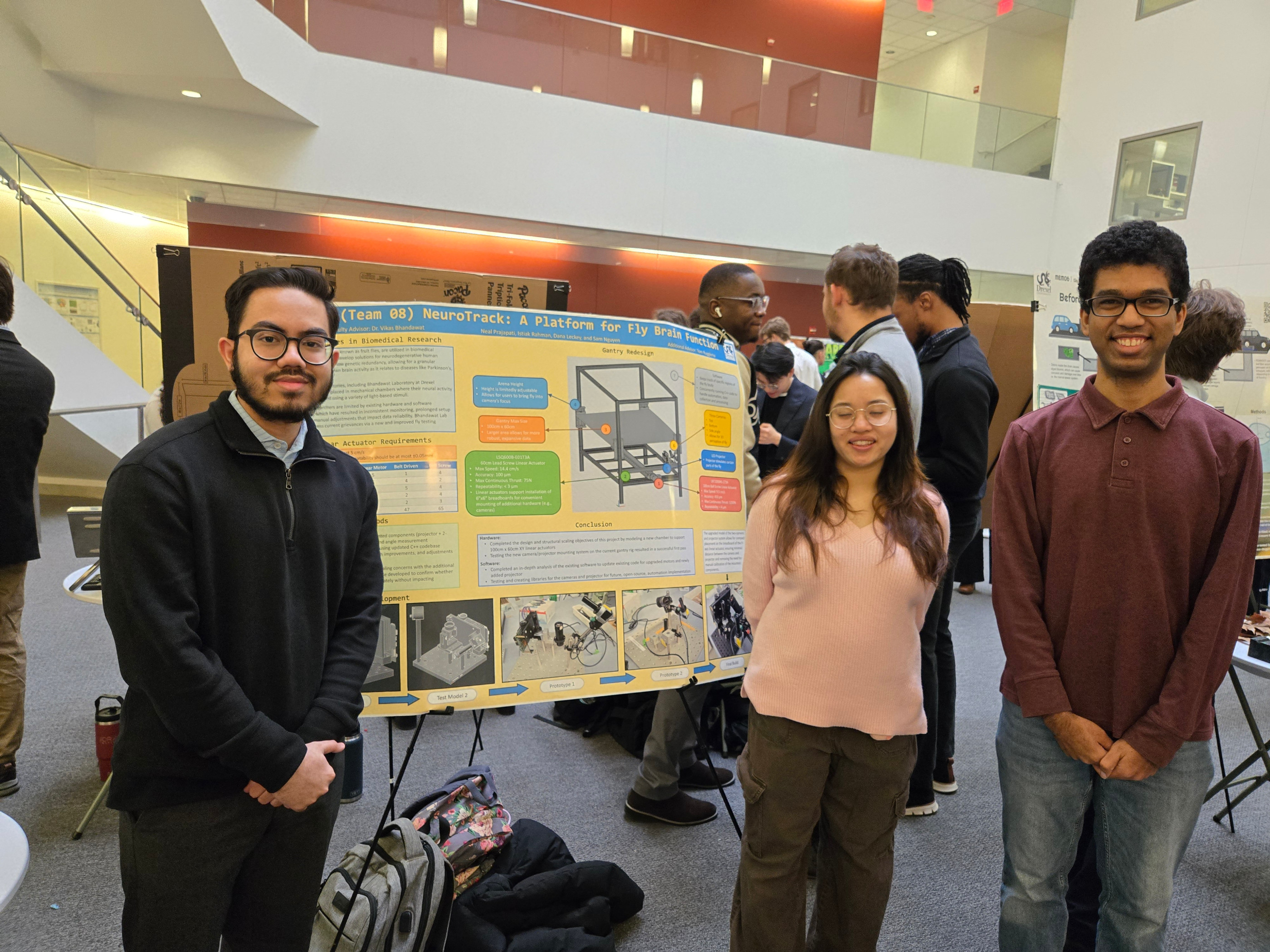
One Liner: NeuroTrack is an updated robotic gantry model made in association with Bhandawat Laboratory at Drexel University to improve data quality in fruitfly research via enhanced hardware from Zaber Technologies integrated with open-source software.
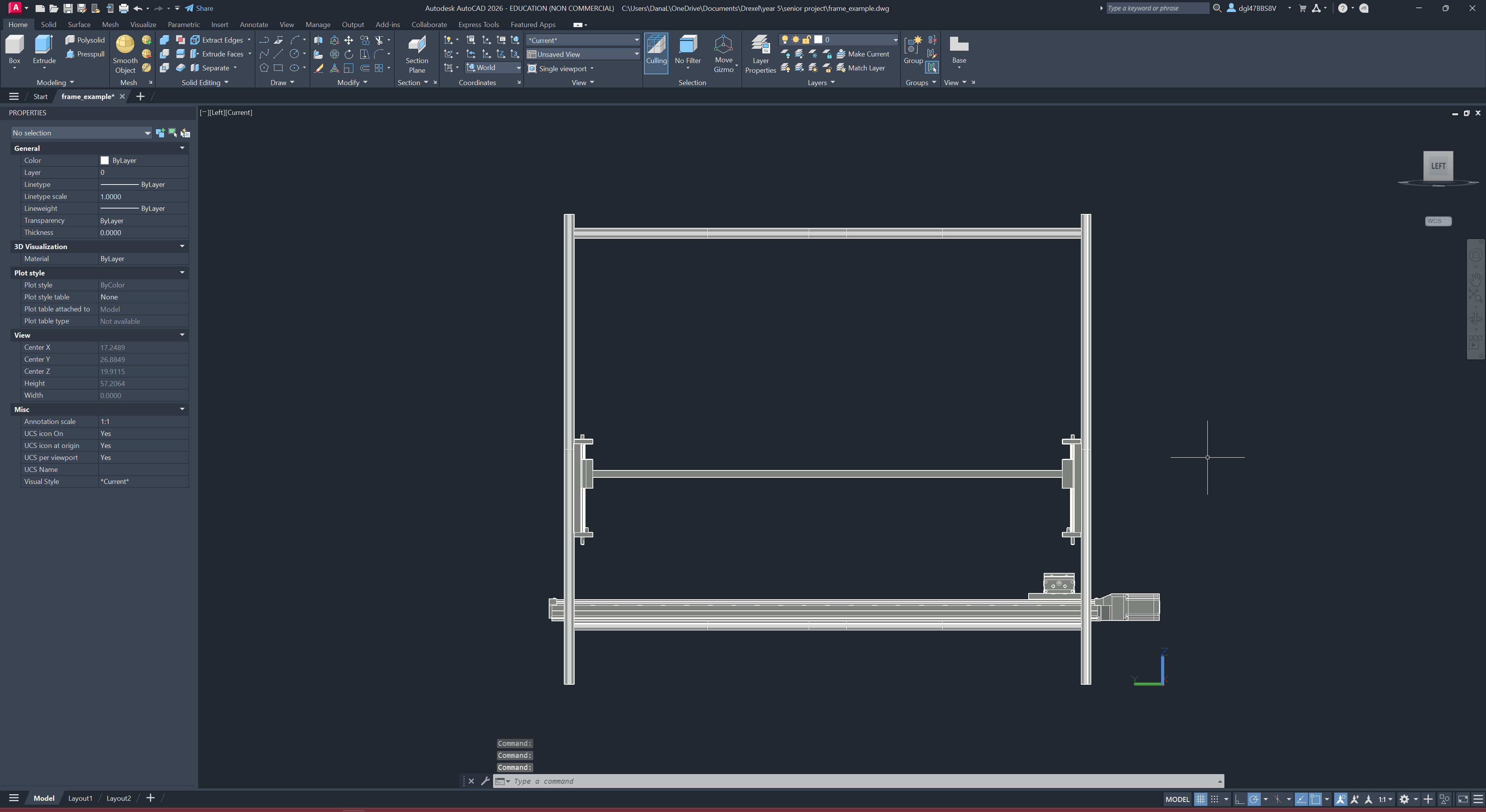
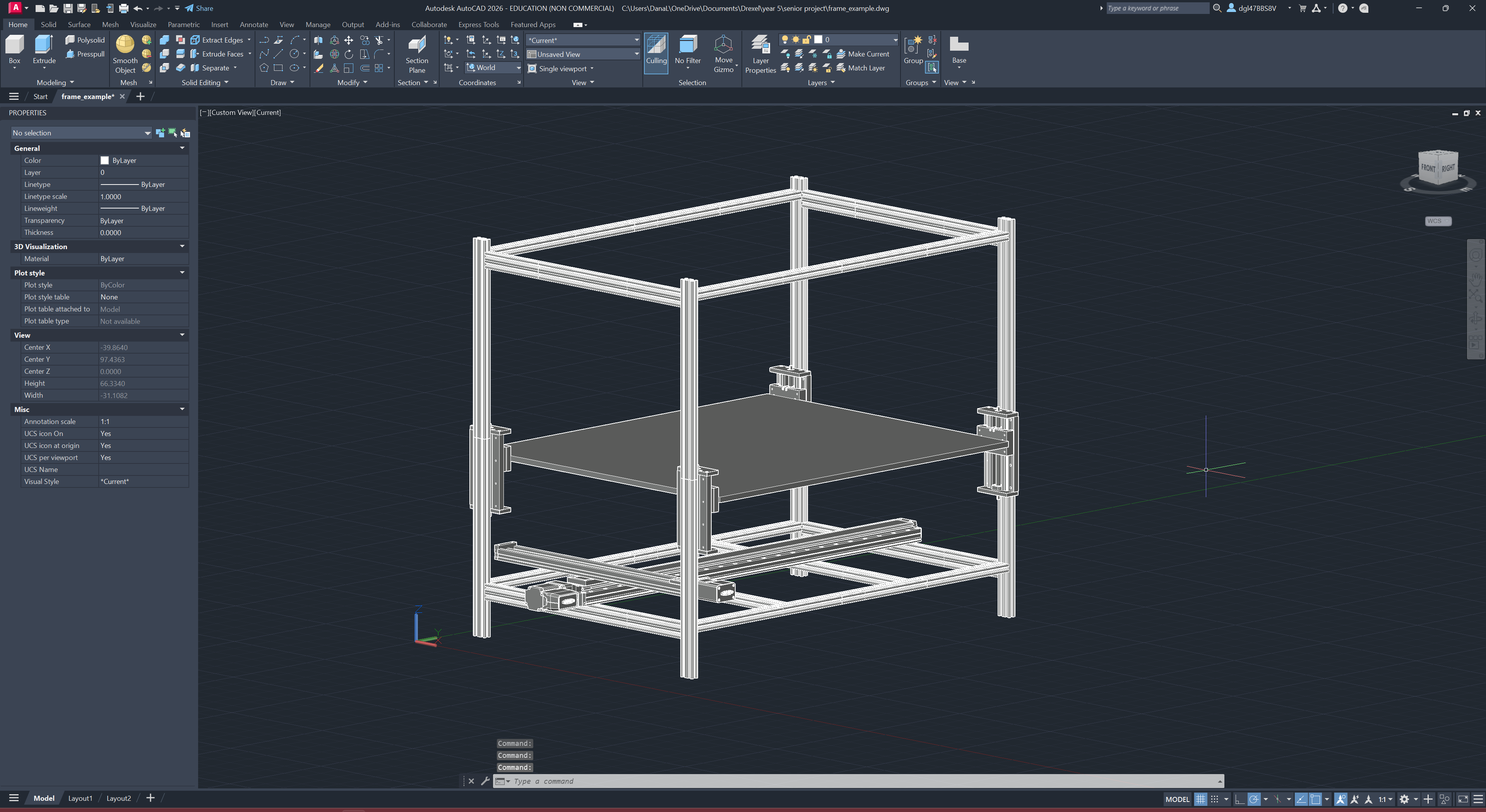
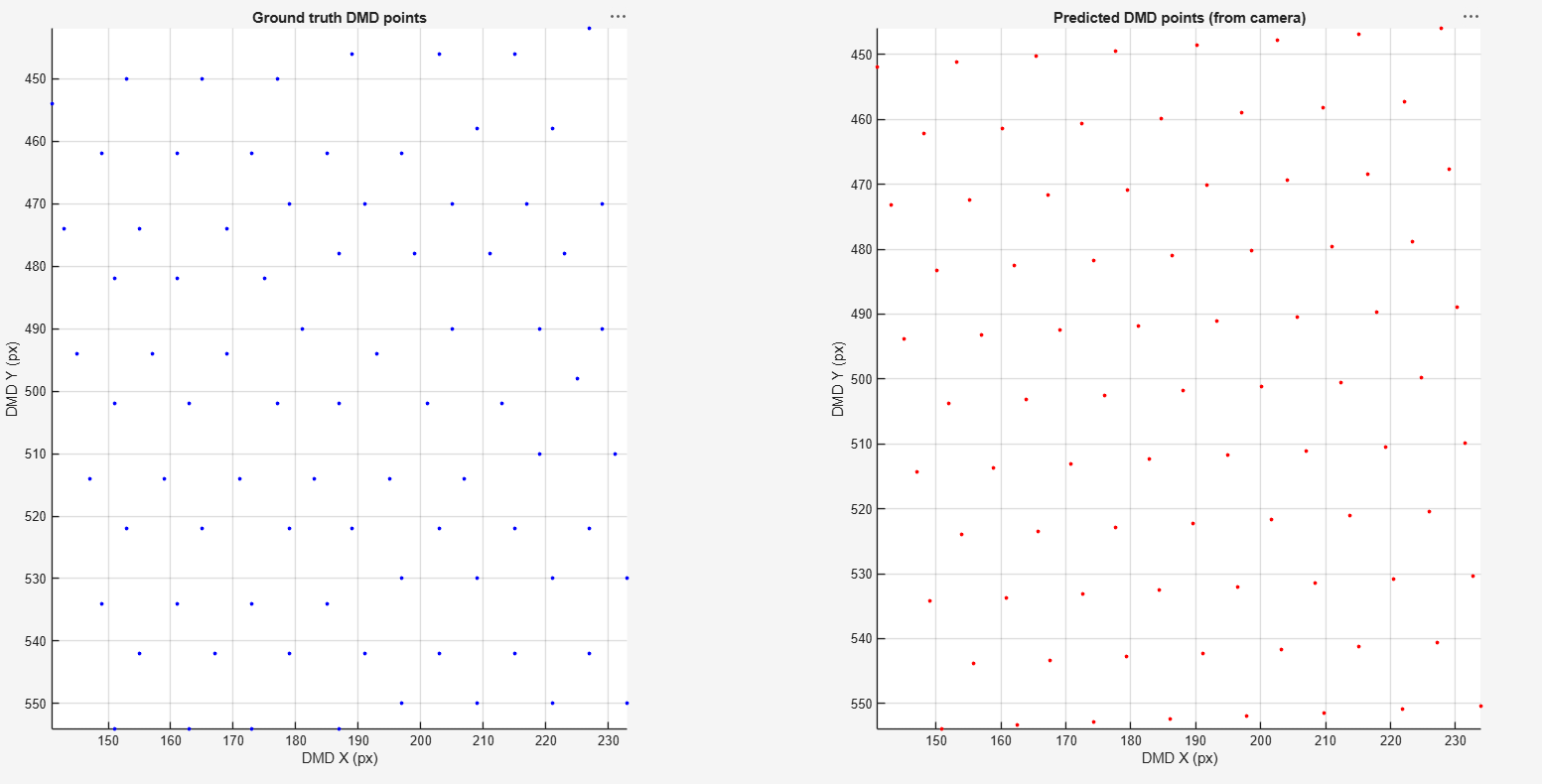
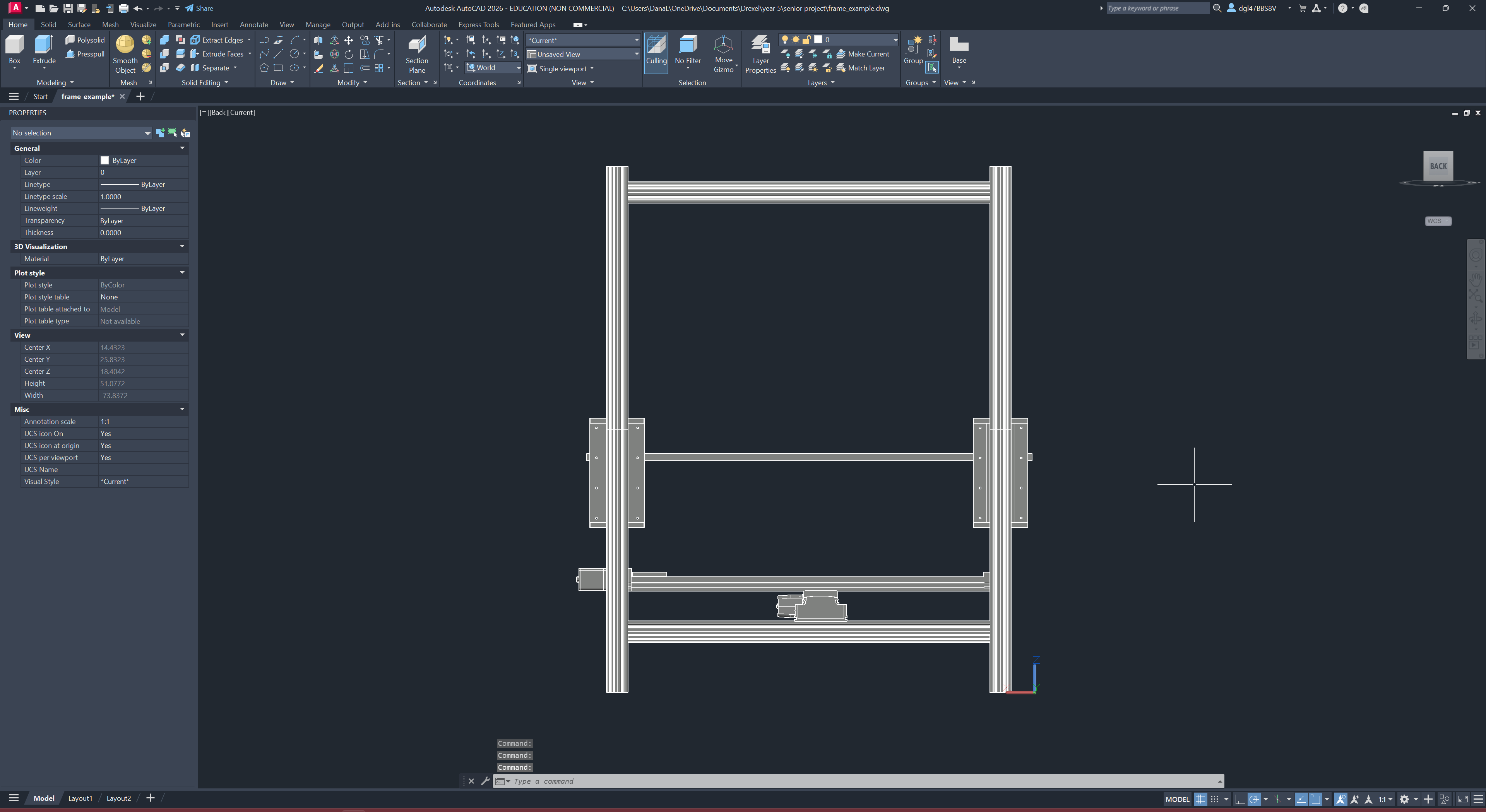
Drosophilae, commonly known as fruit flies, are utilized in biomedical research to model and develop solutions for neurodegenerative human diseases. Flies contain low genetic redundancy, allowing for a granular understanding of human brain activity as it relates to diseases like Parkinson’s, Alzheimer’s, etc. At biomedical laboratories, including Bhandawat Laboratory at Drexel University, flies are placed in mechanical chambers where their neural activity can be manipulated using a variety of light-based stimuli. However, researchers are limited by existing hardware and software constraints, which have resulted in inconsistent monitoring, prolonged setup times, and manual adjustments that impact data reliability. The NeuroTrack project’s objective is to develop an expanded gantry robotic system that increases the space available for fly observation with additional automation to improve ease of use. This new model will expand the testing arena from 30 x 30 cm to 100 x 60 cm, utilizing faster linear actuators that can cover the maximum area and capture fly behaviors under reduced spatial constraints. Unlike previous models, NeuroTrack features a side-view camera to enhance imaging accuracy by enabling 3-D reconstruction of the fly body. Additionally, a programmable Direct Light Projector (DLP) will target individual arena coordinates to stimulate specific fly body parts rather than the entire body, ensuring that data is not being collected beyond what is intended. Researchers can expect this model to be a cost-effective solution that prioritizes versatility and minimal manual intervention for a wider range of optogenetic studies.
No video available.
Screenshots
5 image(s)